
Thirty Nine Seconds
The ground moved for thirty nine seconds. Tens of thousands still feel the shake.

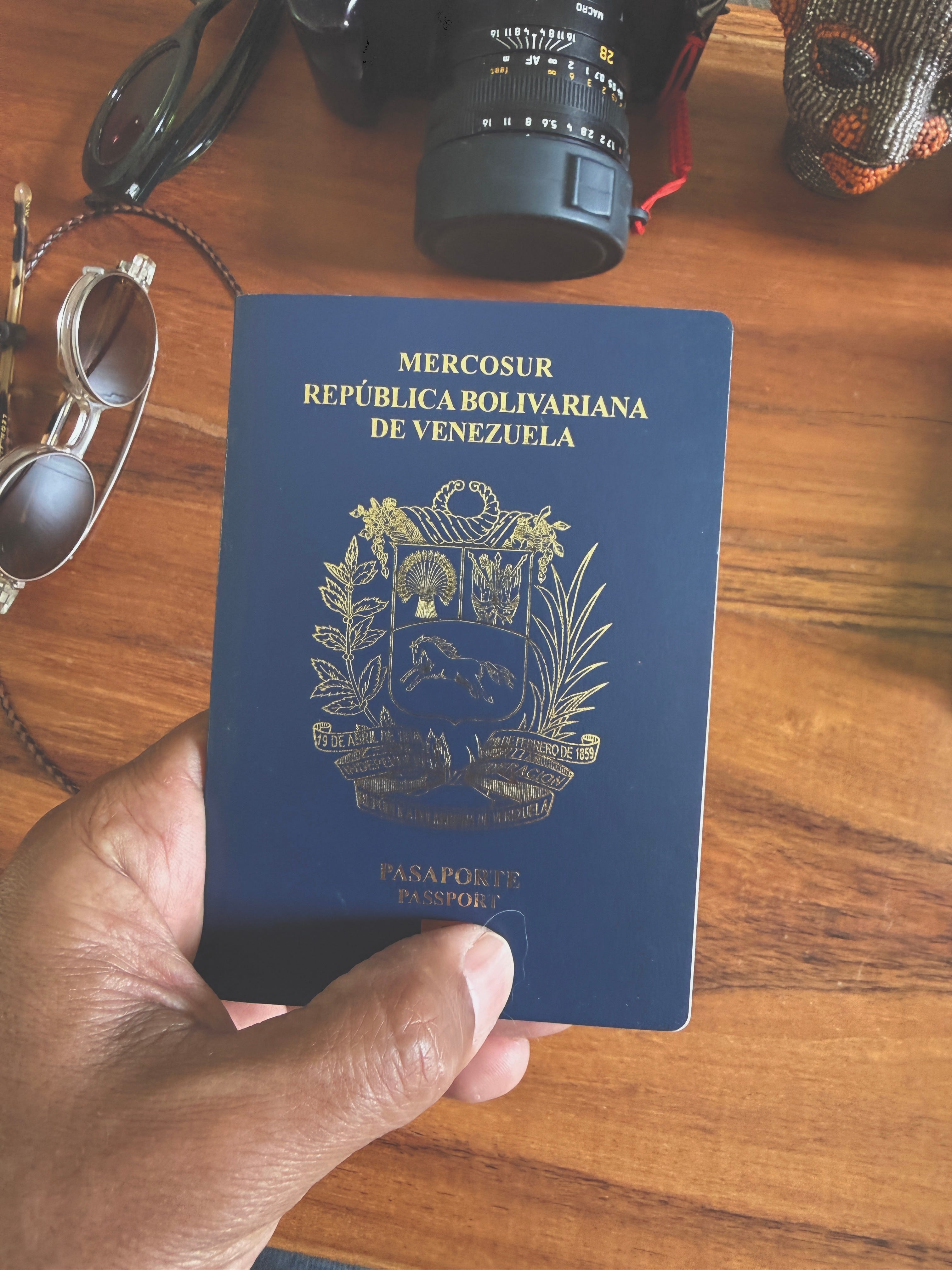
The earthquakes were four weeks ago. The news trucks have folded their antennas and driven to the airport. The feeds have refilled with other things. The word Venezuela has gone quiet again in every room except the ones where it lives permanently, which is to say the kitchens and the group chats of eight million people scattered across the world who have spent a very long time waiting for everyone else to look.
In La Guaira, four out of every five buildings are on the ground. That is the number I keep returning to. Eighty percent of a place, taken down to its foundations in the time it takes to stand up from a chair. The rubble is still rubble this morning. The people standing in front of it are still standing in front of it, and they will be standing there long after the rest of the world has finished feeling something about it.
On June 24, at four minutes past six in the evening, the ground in northern Venezuela moved at magnitude 7.2. Thirty nine seconds later, before anyone had crossed a room or reached a doorway or understood what the first one was, the same fault moved again at 7.5, the strongest earthquake Venezuela has known since 1900. More than 5300 people are confirmed dead. 6700 are injured. Tens of thousands remain unaccounted for, a phrase that means one thing to those of us reading it and something else entirely to the families who are holding it.
Thirty nine seconds is the whole architecture of a life reorganized. It is the width of the THRESHOLD. Everything a person owned and everyone a person loved sat on one side of it at 6:04 and on the other side at 6:05, and a life divided into a before and an after.
I left Venezuela in 1994. I have been measuring the distance ever since, first in years, then in the faces of people I understood I would not see again, then in the strange currency of a country you carry rather than visit. Exile teaches you a particular relationship with news from home. It arrives late. It arrives secondhand, through a screen, in the voice of a stranger who is pronouncing the names wrong. It arrives while your hands are completely free and completely useless, which is a sensation I have never found adequate words for and have stopped trying to explain to people who have not lived it.
In December of 1999 rains came off mount Ávila and brought the mountain down onto that same coast, and roughly fifteen thousand people went into the mud and never came back out. Fifteen thousand homes gone. Seventy five thousand people with nowhere to sleep. The official count was never released. My generation grew up with that coastline as the place you went on weekends. I learned to Surf and get buzzed on the jungle concoction we call guarapita, there. The mud swallowed a city, and now we are watching the same eighty kilometers of shoreline break a second time inside one lifetime. Geology has no memory and no sense of proportion. It simply repeats and reminds us who’s in charge, a humility slap on the face.
What I have been sitting with these four weeks is how quickly attention and care come apart from each other. Attention arrived in June, enormous and immediate, and it did what attention does, which is to burn very brightly for eleven days and then go looking for the next bright thing. Care operates on a completely different clock. The emergency phase has passed. Crews are still working the rubble in La Guaira with far fewer people watching them do it. Recovery in these communities is now measured in in years. Which means the moment that determines what actually happens to La Guaira is not the moment the cameras were there. It is this one. It is the quiet one, four weeks in, when the story has stopped being a story and has become the ordinary shape of somebody’s Tuesday.
That gap is where the useful work lives. It is also, for those of us who are far away, the only place we have ever been able to stand. I cannot lift concrete in Caraballeda. What I have is music, and music is the currency I trade in. It is the one thing I know how to convert into something else, attention into feeling and feeling into a decision somebody carries out of the building with them. Music builds the bridge and action is what crosses it. Another THRESHOLD.
The other thing I have is a way to send money that arrives cleanly, which in Venezuela is a harder sentence than it sounds, because getting funds to people there without routing them through channels that have never served them well is its own problem to solve. I have spent time on that question and I am satisfied with the answer. Global Empowerment Mission is based in Doral, it has been on the ground in Venezuela since the week of the earthquakes, and its money reaches households rather than ministries. Everything raised goes there.
On Saturday, July 25, I am playing at Palapa Miami. The whole night exists for this. Miami holds the largest Venezuelan community outside of Venezuela, and a great many of the people in that room left the same way I did and have been carrying the same country the same way since. There is something specific that happens when a group of people who cannot go home stand together in a room and make the distance produce something. I have watched it happen at enough of these to know it is real. The music is the excuse and the vehicle. The gathering is the point.
If you are in Miami, come. If you are anywhere else, the link does the same work the ticket does.
I have thought a great deal about why this piece took four weeks. Part of it is that I did not know how to write about a country I have not lived in since I was young without sounding like a tourist of my own grief. Part of it is simpler. For thirty two years the answer to what do you do about Venezuela has been a massive and collective frustration, and the muscle for doing something atrophies when it goes that long unused. It turns out the muscle is still there. It turns out the answer this month is a room, a date, and a link, which is a small answer and a real one.
The ground moved for thirty nine seconds.
Everything after that is the rest of us deciding what the “after” looks like.